How to Use Live Data to Read Maf Sensor?
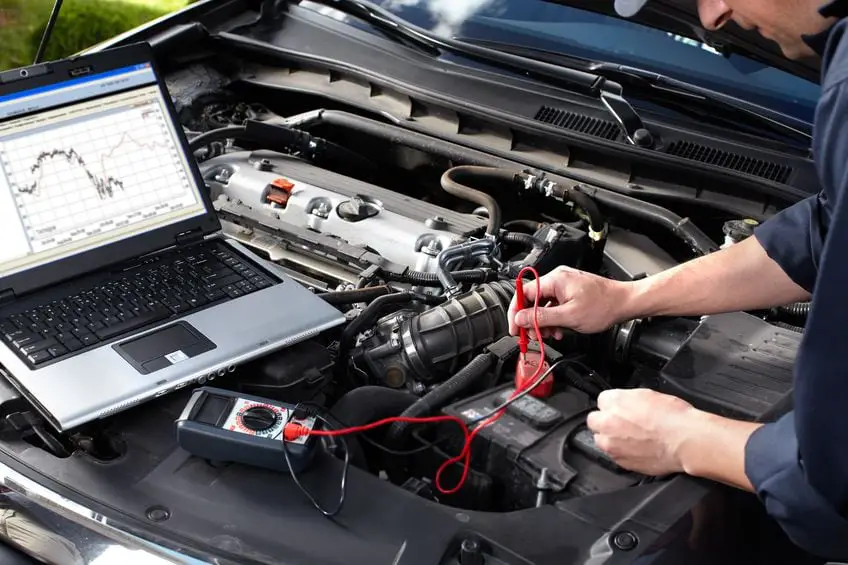
Using OBD2 scanner to troubleshoot live engine sensor data
Skip to the good stuff:
- Using OBD2 scanner to troubleshoot live engine sensor data
- Start Things Commencement
- How to Translate Generic Scanner Data
- STFT (short-term fuel trim) and LTFT (long-term fuel trim).
- Engine Coolant Temperature
- Intake Air Temperature and Air Injection
- Mass Airflow
- Manifold Absolute Pressure level
- Ignition Timing
- Oxygen Sensors
- Engine Revolutions per Minute or RPM
- Decision
Hey I'm Matt – Most DIY car fixes tin be easily achieved using a bones OBD2 browse tool and today we're going to assist yous understand how to read live data from OBD ii diagnostic scanners.
It doesn't matter if you have a wired or wireless code reader, or if you prefer Wi-Fi over Bluetooth depending on your preferred device. Learning how to interpret the live information from an OBD2 scanner is an excellent way to diagnose drivability problems in your ride.
Before cheap OBD2 scan tools became mainstream, mechanics had to buy expensive factory scan tools. This especially holds true for import European vehicles that demand a higher level scanning tool.
But now, even the most bones OBD2 scanner can not only browse and read diagnostic trouble codes (DTC). It can as well read live sensor data. And while the data lonely will not reveal the exact prepare needed to sort out any problems with the motor, it will give you a bird'southward eye view of the problem so you can pinpoint the actual mistake.
But in guild to do this, you'll need to learn how to read live data from your OBD2 scan tool.
First Things Outset
Before starting your engine diagnostics, you're going to need a code reader, aka OBD2 Scanner. Nosotros've written lots of articles about different scanners that nosotros use, and so bank check out these if y'all don't however accept one:
Quick Tip
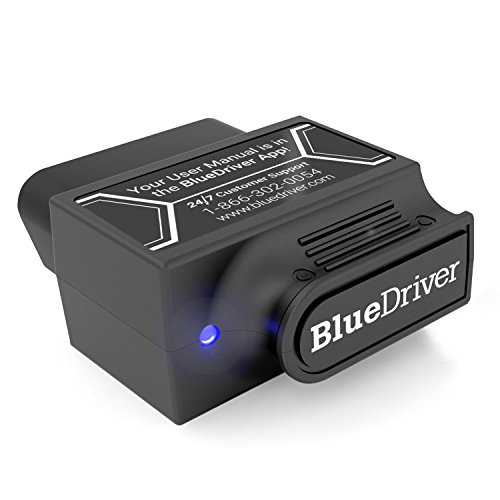
The BAFX is a great selection for Android. If you have iPhone (or Android) the Bluedriver is a terrific choice.
Sale 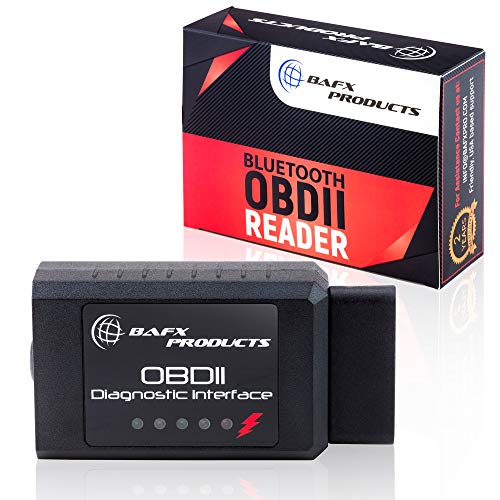
More options:
- OBD2 scanner for Android – You'll besides need an app similar Torque Pro (paid) or Torque Lite (free)
- OBD2 scanner for iPhone/iOS – You lot'll also need to download an app like OBD Fusion
- Corded OBD2
Later you've got that done, make certain it'southward plugged in to the port and paired with your telephone (if you have a wireless one).
Y'all want to make sure your car/truck is in Closed Loop way.This just ways that the engine is warmed upwardly to a nice 180-190*F and then you're seeing the true numbers from the sensors rather than the generic numbers from the figurer.
How to Interpret Generic Scanner Data
All 1996 and newer vehicles sold in the USA are OBD2 uniform. However, the amount of OBD2 parameters obtained volition depend on the specific OBD2 protocol of the vehicle. Under the original OBD2 specification (older OBD2 protocols such as SAE J1850 PWM/PWV and ISO 9141-two), up to 36 parameters are available.
Pro Tip
Wait up generic OBD2 codes here
But in newer OBD2 vehicles that support the Tin-Charabanc protocol, yous have up to 100 generic parameters at your disposal. This means there is a greater quantity of live information bachelor, which will brand it easier to determine any type of mistake in the vehicle, including non-engine related trouble codes including ABS, transmission, and airbag trouble codes.
STFT (short-term fuel trim) and LTFT (long-term fuel trim).
When reading live information from any OBD2 scan tool, it is best to always check the STFT (brusque-term fuel trim) and LTFT (long-term fuel trim). The fuel trim is crucial in determining how the ECU is controlling the fuel commitment in the engine.
Both the STFT and LTFT are expressed as a percentage by the browse tool. The ideal reading for the STFT and LTFT is within the range of 5% (yous don't want to see anything higher than 10% or lower than -10%).
Higher/Positive percentages in the fuel trim means the engine computer is trying to recoup for a lean condition in the motor by enriching the mixture. This means the vehicle might have problems with the fuel system, injectors, oxygen sensors, or mass air menses sensor. This tin also mean vacuum leaks in the system.
Lesser Line
Yous want to see single digit numbers whether you lot're looking at SHRTFT, LONGFT, or negative and positive levels! Negative numbers means it'south taking fuel abroad and positive ways information technology's adding fuel.
On the other hand, a Negative/Lower fuel trim means the CPU is attempting to switch the fuel mixture to lean to recompense a rich mixture. From this reading, it could possibly mean excessive force per unit area or leaking fuel injectors, a ruptured fuel pressure diaphragm, or a faulty EVAP organization. If the STFT or LTFT readings are exceeding 10%, this signifies a problem in the fuel system.
No affair the case, the showtime live data you should read upon connecting the OBD2 scan tool is the STFT and LTFT. This alone will give you an thought on the possible causes of any engine issues in your vehicle.
In normal cases, the STFT data reading should shift apace between rich and lean. The LTFT should signal a more than stable pct. Remember the fuel trim should be checked in three stages:
- During engine idle
- At ane,500 rpm; and
- At two,500 rpm
It is important to check the fuel trim in all the required operating stages. Every bit an example, if the LTFT is at twenty% during idle but adjusts correctly to 5% at 1,500 and 2,500 rpm, the focus should exist on certain issues that crusade the lean engine condition at idling speed. But if the LTFT is at 20% at all stages, this could mean a problem with the fuel supply such equally a bad fuel pump.
Ratchets And Wrenches did a great video explaining in-depth fuel trims. Become check it out.
Engine Coolant Temperature
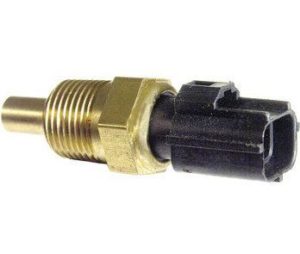
The engine coolant temperature should be at 190 Fahrenheit or college when the engine is at the ideal operating temperature. A lower ECT means the ECU will enrichen the fuel mixture and raise the idling speed to recoup for a cold motor.
Intake Air Temperature and Air Injection
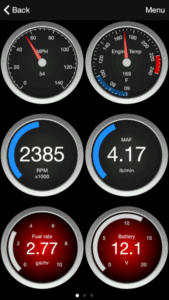
If the engine is common cold, the intake air temperature and the engine coolant temperature must be between 5-degrees Fahrenheit. Besides, the air injection will be in open loop upstream mode. This means the air is apace routed to the exhaust manifold to speed up the heating of the oxygen sensors and to burn off excess hydrocarbons.
But if the engine is hot, the engine will exist in closed loop downstream way. This ways the air volition be forced into the catalytic converter to fire off the hydrocarbons. If the engine is decelerating from higher rpm, the air is shifted into temper mode to preclude backlash in the combustion chamber.
If the engine is in closed loop mode, the air should ever be in downstream mode. The oxygen sensors are the chief basis for the air/fuel mixture if the system is in closed loop.
Mass Airflow
The MAF or mass airflow sensor reading volition be displayed as grams per second or pounds per minute. About of the MAF sensors in modern vehicles are equipped with a hot wire that calculates the volume of air. If the wire is dingy or damaged, it tin can crusade an inaccurate reading which causes the ECU to either shift to a lean or rich status.
Manifold Accented Pressure
The MAP or manifold absolute pressure level sensor is utilized by the ECU to determine the engine load. Depending on the make and model of your vehicle, information technology can be equipped with either a MAF and MAP sensor or both. The normal MAP sensor reading is 29.6-inches hg at sea level if the engine is not running and around 9.half dozen-inches hg at idling speed. The reading volition rise to as high every bit 29.6-inches at broad open or full throttle.
Ignition Timing
The ignition timing alive information will point the amount of timing the CPU is adding or subtracting based on specific sensor inputs. If the MAP sensor is putting out a lean control, the CPU will adapt or accelerate the timing. If the MAP reading is rich, the CPU will retard the timing. If the engine is under heavy load, the CPU will likewise retard the timing to forbid early detonation.
Oxygen Sensors
The output voltage of the O2 sensors are utilized by the CPU to control the fuel mixture in the motor. Y'all can also use live information from the O2 sensors to check the condition of the catalytic converter. The oxygen sensors will need to exceed 0.8-volts and drop below 0.2-volts and transition rapidly as you lot stride or snap-exam the accelerator pedal. The switching rate of the rise and drop in O2 sensor voltages should happen in less than 100 milliseconds.
Depending on the type of vehicle, at that place will nigh likely be 2 or more than O2 sensors in the exhaust arrangement. If the catalytic converter is working properly, the rear O2 sensor volition concord a steady voltage reading.

Engine Revolutions per Minute or RPM
The RPM or revolutions per infinitesimal is the engine speed. The ECU utilizes the RPM reading to fire the ignition coils and to pulse the fuel injectors. In vehicles equipped with an automatic transmission, the RPM readings will exist utilized past the ECU to command the operation of the torque converter and to control the shift points as you lot drive the vehicle.
Conclusion
Hopefully this gives you lot a skillful basic understanding of how to read live data from OBD II scanners. There's certainly plenty material for each of these sensors that nosotros could write an entire blog mail service for so yous'll take to utilize this guide a roadmap. If nosotros notice fourth dimension in the future we'll add together more to this 🙂
Matt
Source: https://scanneranswers.com/read-live-data-from-obd-ii-scan-tools/
0 Response to "How to Use Live Data to Read Maf Sensor?"
Post a Comment